
Vestibular Therapy
What is Vestibular Therapy?
Vestibular therapy is a specialized form of physical therapy focused on treating balance and dizziness problems. These issues often involve disorders in the vestibular system, which is located in your inner ear that helps maintain balance.
Our ability to interact with the environment and people around us requires key performance of neural networks in your brain. Since your brain is connected to your body, it also depends on the functions of your digestive, immune, hormonal, mitochondria health, just to name a few.
If you feel the symptoms of: floating, disorientation, lightheaded dizzy, spinning dizziness, eye fatigue and strain, the integration of your vestibular system with other sensory information might not be working properly.
Our therapy approach is:
- Identify weak or dysfunctional structures in the brain and vestibular system
- Strengthen (upregulate) the necessary structures to improve neural connection
- Calibrate the vestibular system and associated multi-sensory information
- Apply the improved neural connection to your life situations that are challenging for you. Develop coping strategies through specific customized exercises that retrain your brain.
Co-management at Compass Health Center
Jasmine works closely with NUCCA practitioner specialist, Dr. Tung, to co-manage each case safely and effectively. Jasmine will recommend Dr. Tung’s services if she feels you would benefit from specialized upper cervical neck care.
What to expect during your therapy sessions
-
Thorough review of your medical history – questions about your previous medical history, cardiovascular health and function, diet, surgical history and operations, current medications, timeline of diagnoses and symptom onset
-
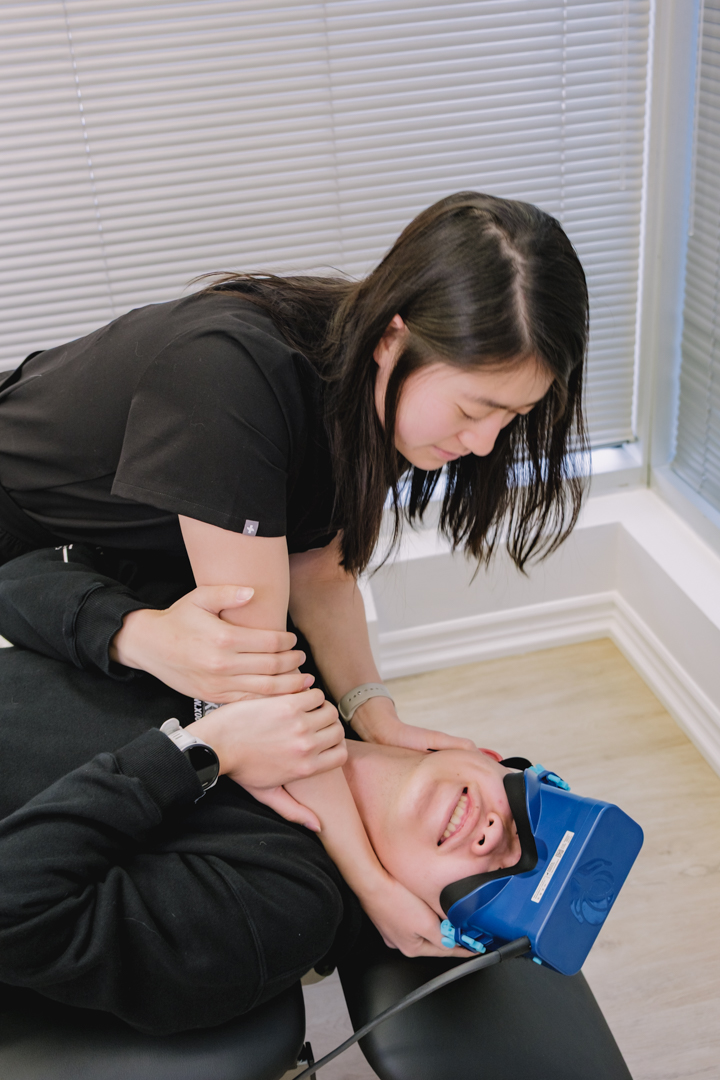
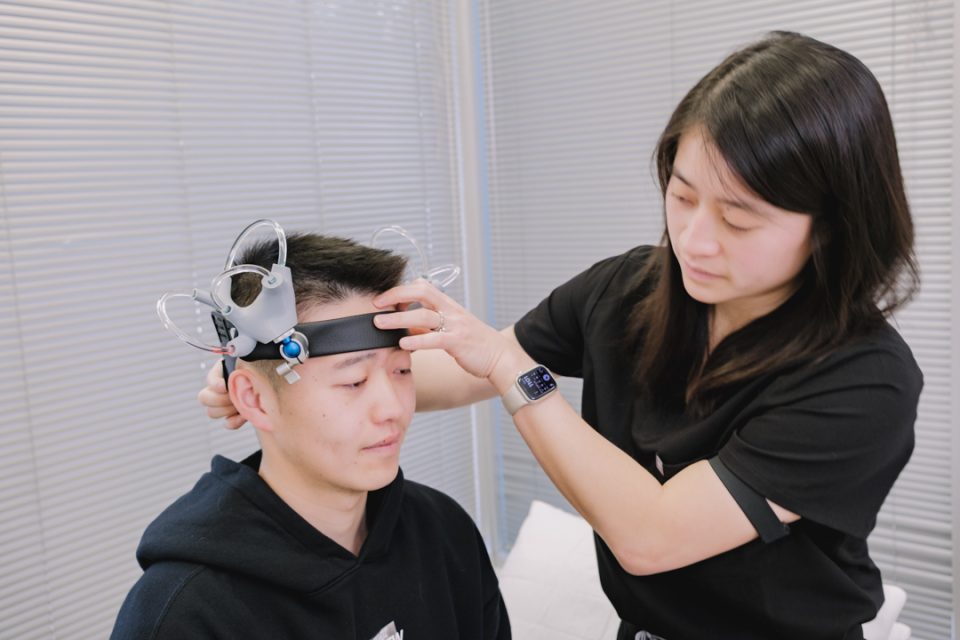
Comprehensive vestibular assessment with infrared goggle testing – ocular testing, cervical musculoskeletal health and function, positioning challenges, dynamic gait tests, conducting balance and movement tests
-
Education on your condition and relevant findings – explain the neuroanatomy and vestibular system in relation to your symptom presentation, customized exercises for home practice , and goal setting
-
Individualized therapy program – improve vestibular system, sensory integration, calibration exercises of visual and vestibular system, recommendation for therapeutic support, progression expectation, remain accessible throughout treatment
-
Advice on co-management – provide clinic updates to your health care team, refer to other professional care such as neuro-optometrists, trauma counselors, upper cervical chiropractic
Our processes at Compass Health Center
- Book a complimentary 10min discovery visit so we can understand your history/situation
- When indicated, follow through with initial exam for in-depth exam to determine biomechanical causes for dizziness
- Plan your course of treatment which varies for each case, but results are typically seen within 2-4 appointments then we plan follow-up as needed
- Discharge – we operate with the expectation that our clients can eventually self manage with a hands-off . A combined approach of hands-on therapy, education on dizzying resources and access to our expertise through email/phoning the clinic should set-up our patients for success.
Who Needs Vestibular Therapy?
Vestibular therapy is recommended for people who experience:
- Dizziness or vertigo: A spinning sensation or feeling lightheaded.
- Disorientation or off-balance: Occasional or consistently feeling unsteady on your feet, frequent almost falls, floating or bouncing sensation
- Motion sensitivity: Discomfort or dizziness when moving your head or changing positions.
- Visual disturbances: Blurred vision, especially when moving.
How Does Vestibular Therapy Work?
A comprehensive plan to calibrate your balance centers in order to progress to your personalized goals of what your definition of success is.
- Static & Dynamic Balance Training: Teaching your body to maintain stability in different situations, like standing, walking, or changing positions.
- Eye and head movement control: Exercises to help your brain understand the relationship between head movement and visual focus. Supplemented with visual cues like light and auditory cues like a metronome.
- Vestibular exercises for re-calibration: not just habituating the same nauseating rapid head and eye movement
- Core training: Improving your inner core unit activation to improve stability and vasomotor response.
For some, vestibular therapy provides quick relief. Others may need a longer period to see improvement, but the goal is always to reduce symptoms and improve daily function as quickly as possible.

WE CARE. WE LISTEN. WE GET RESULTS.
Break free from pain, so you can get back to doing the things you love.
Enjoy a brighter future, and be healthier than you ever thought possible!