Joint Instability
Every joint in the human body is designed to move within a specific range and direction. These joints stay within the confines of what ligaments and muscles allow, as these two tissues help support and hold them in place.
The craniocervical junction refers to the region where the head joins with the top of the neck. Instability at this region means that the head and the upper bones of the neck are moving too much. Since this junction is such a sensitive area, instability that happens at this area can result in a variety of symptoms, including but not limited to: headaches, dizziness, visual problems, digestive problems and cognitive issues.
While craniocervical instability (CCI) can be caused by upper neck fractures, these are extremely rare and classified as surgical emergencies. This post will only cover CCI that occurs with intact bones but compromised ligaments, as this kind of CCI can be commonly missed.
Our ligaments hold joints together and ensure that they do not move beyond a safe range of motion. When ligaments are damaged, joints can begin to move excessively, in a manner in which they were not intended. This causes additional stress on the joint and bone surface, which will begin to wear down. As the joint damage progresses, surrounding structures such as nerves and muscles can be implicated as well. CCI will affect the function of nerves from the neck, but may also impact the autonomic system that regulates blood pressure, heart rate, immune function, breathing and cognition.
Ligament damage can be caused by direct trauma like a motor vehicle collision, a hit to the head, or self-manipulation of the head and neck. Certain individuals may have conditions such as Ehlers Danlos Syndrome (EDS), where their stretchier than normal ligaments predisposes them to injury. In cases like these, ligaments may become damaged even without a traumatic event.
Diagnosis for Craniocervical Instability
Most patients with cervical instability see countless practitioners before receiving a proper diagnosis. The Centeno-Schultz Clinic provides a couple examples of patients who take multiple detours before finding out about their upper neck problem:
- Headaches that are caused by the CCI end up getting worked up and treated by a neurologist as migraines, which are a different animal involving blood vessels in the brain.
- Dizziness/Imbalance/Lightheadedness caused by the bad position sense information coming in from the damaged upper neck is often worked up as a vestibular problem by an ENT doctor with tests like a VNG.
- Rapid heart rate caused by Vagus nerve irritation is often worked up by a cardiologist with a Holter or other wearable monitor to rule out supraventricular tachycardia.
- Brain fog or problems concentrating caused by the weird inputs coming in from the damaged neck is often worked up by a neurologist as a brain injury, stroke, or a seizure disorder.
Our office makes sure to screen all patients for this condition so that we can point you in the proper direction if necessary.
While symptoms may vary, one noteable sign is if you have difficulty keeping your head up. Patients with CCI often feel like a “bobble-head”, or that their head is too heavy for their neck. This may be combined with a variety of symptoms that are listed below:
- Headaches
- Dizziness/lightheadedness
- Brain fog
- Clicking and popping in the neck
- Digestive issues
- Rapid heart rate
- Fatigue
- Memory loss
- Ringing in the ears (tinnitus)
- Visual disruption
- Jaw pain (TMJ)
- Shoulder pain
- Numbness/tingling in various parts of the body
- Facial pain
- Sweating
When it comes to treatment outcomes, CCI patients typically do worse with physical therapy, massage and traditional chiropractic care. Mobilization/manipulation, strengthening and stretching often creates too much movement in the neck, which exacerbates the already compromised craniocervical junction and its surrounding structures.
Imaging is another method to help determine if there is instability of the upper neck. DMX (digital motion x-ray) is preferred when evaluating neck stability, as it can capture a video of how one’s bones are moving. Our office does not have a DMX machine, but we utilize x-rays to evaluate the following measurements:
CXA (Clivo-axial angle)
ADI (Atlanto-dental interval)
Flexion-extension measurements
By combining a thorough history, full list of symptoms, response to prior treatment and imaging, we are able to screen for CCI.
Treatment Options
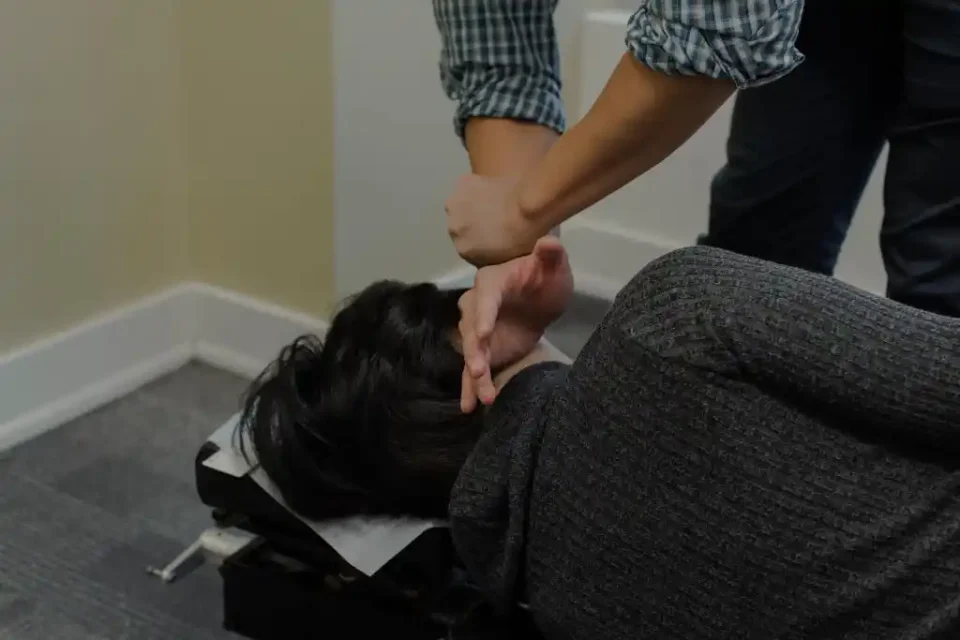
At our office, we perform the NUCCA procedure, which is an upper cervical chiropractic technique. Many of our patients feel enormous relief from their symptoms with upper cervical chiropractic care. Not all patients see an improvement with our care.
Other treatments that can help include: Atlas Orthogonal or Blair (upper cervical techniques), specially trained physical therapists, cervical curve correction, craniosacral work, prolotherapy, platelet rich plasma or bone marrow injection. If all else fails, surgical fusion may need to be considered.
Further Reading and Resources to Help
Download CCI 101 – Understanding Craniocervical Instability and the Road to Recovery
The CCJ Instability Institute
Caring Medical – Cervical spine instability and atlantoaxial instability
Caring Medical – Symptoms and conditions of craniocervical and cervical instability